Is Manok Na Pula Mod APK Safe?
Manok Na Pula Mod APK is safe on the dimension most readers mean when they ask — the on-device file itself, once verified against a published hash and scan report — but “safe” is really four separate questions: whether the file carries malware, whether using it risks your account, whether it’s legal to run, and what it does with your data. Each has its own honest answer, and none of them is a single yes or no.
SAFETY SNAPSHOT
FILE SAFETY
Verified — scan + hash published
BAN RISK
Depends on game mode
LEGALITY
Nominative fair use
DATA ACCESS
Storage only, by design
FULL SCAN
VirusTotal report ↓
What “Safe” Actually Means for a Modded APK
Every competitor page answering this question collapses it into one verdict. It isn’t one question — it’s four, and they don’t share an answer.
On-device file safety
Does the APK itself contain malware, spyware, or a malicious payload beyond the modification itself? This is what a virus scan actually measures.
Account-ban risk
Does using the mod risk suspension or a permanent ban on your game account? Depends entirely on which mode you play in, not on the file itself.
Legal risk
Is running or distributing a modified version of someone else’s game a copyright or trademark problem? A real legal question with a real, non-hedged answer.
Data-privacy risk
What does the app’s permission set actually let it access, and does the modification change that?
What a Modded APK Technically Is
A modded APK is the original Android app, decompiled, altered, and re-signed under a different key — not a separate program written from scratch, and not simply “a copy with extra features bolted on.”
The original APK is unpacked with a tool like APKTool into its underlying smali code (a readable intermediate form of the compiled app), the resource-unlock and stat-modification logic gets patched in at that level, and the whole package is recompiled and signed with a new certificate. That last step has real consequences: the original app, com.tatay.manokNaPula, is signed by TATAY Games with their own certificate, and Android permanently ties a package name to whichever signature first registered it. A modder’s re-signed build carries a different signature by construction — which is exactly why Google Play Protect flags every modded build of every app, not something specific to a poorly-made one.
This is also why “is this modified?” and “is this a virus?” are different questions with different evidence behind them. Modification is confirmed the moment the signature doesn’t match — a cryptographic fact, not a security judgment. Whether the modification also carries something malicious is answered by the scan breakdown below.
Reading a Real VirusTotal Scan: What a Per-Engine Breakdown Shows
A VirusTotal report isn’t a single verdict — it’s 60-plus independent antivirus engines each returning their own read on the same file, and the aggregate number at the top hides more than it tells you.
Engine type (illustrative)
What a result typically looks like
Signature-based engines (most)
Clean — no match against any known malware signature database
Heuristic / behavioral engines (a smaller subset)
May flag a generic label (“Trojan.Generic,” “Agent,” “Heur,” “PUP”) based on structural pattern-matching, not a signature match
Reputation-based engines
May flag low-reputation for any freshly-built or infrequently-seen file, independent of content
A result reading “2/71” or “3/72” means two or three engines returned a flag while the rest returned clean — and the flag type matters more than the count. A generic “Agent” or “Heur” label from one or two engines is the expected, predictable signature of any modded APK. A result naming a specific, known malware family across multiple unrelated engines is a different and far more serious signal.
The current VirusTotal scan report and the SHA-256 hash to verify your download against are published on the Manok Na Pula Mod APK page and updated every time the linked APK changes — what follows explains how to interpret whatever that report currently shows.
Why Heuristic Engines Flag Modded Files Specifically
Heuristic engines exist to catch malware that doesn’t match any known signature yet — which means they work by scoring suspicious patterns, and a modded APK triggers several of those patterns by construction, independent of whether it’s actually harmful.
Three structural facts about any modded build read as suspicious to a heuristic scanner regardless of intent: the app’s signature doesn’t match the original developer’s on-file signature; the modification logic is frequently wrapped in obfuscation or light encryption specifically to stop other modders from stealing the work, which a scanner reads the same way it reads genuine malware trying to hide its own code; and the file’s internal structure has been altered from what the engine’s database has on file for the original release.
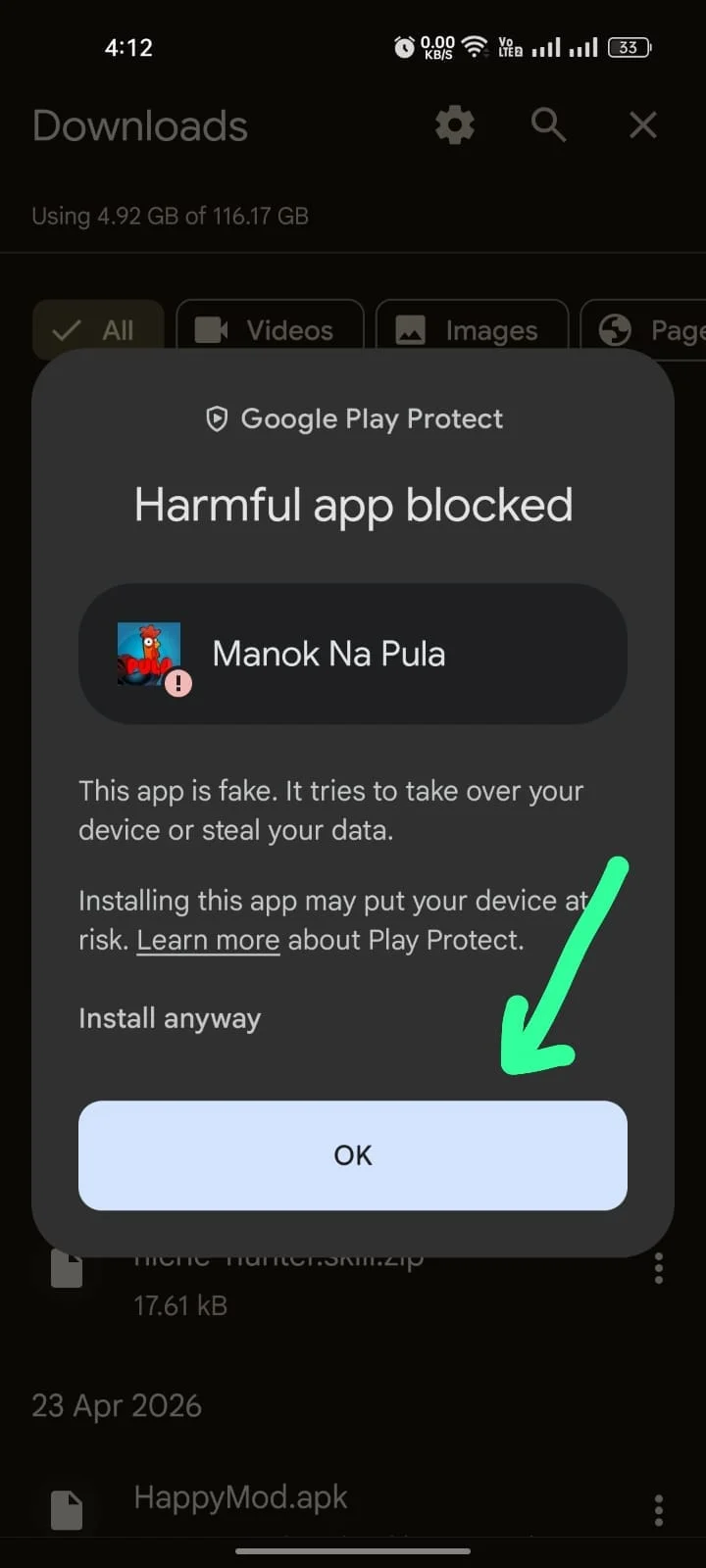
None of this means every modded file is automatically safe — a build from an untrustworthy publisher can carry a real payload wrapped inside the same kind of structural alteration a benign mod uses. The distinction that actually separates the two: whether multiple independent, signature-based engines agree on a named malware family — which the full per-engine report, not the aggregate count, is what tells you.
Mod vs. Cheat vs. Cracked: The Real Distinction
These three terms get used interchangeably across modded-app discussion, and the confusion is real — but they describe three different things.
Mod APK
The broad category: any Android app that’s been decompiled, altered, and re-signed by someone other than the original developer. The alteration can be a translation, a UI change, a resource unlock, or a stat modification.
Cracked
Specifically means the alteration removed a license check, a paywall, or a DRM protection that gated a paid feature. A mod type defined by what it removes — payment verification.
Cheat
An injected gameplay-advantage feature — unlimited resources, one-hit kills, unlocked content — layered inside a mod, independent of whether that mod is also a crack.
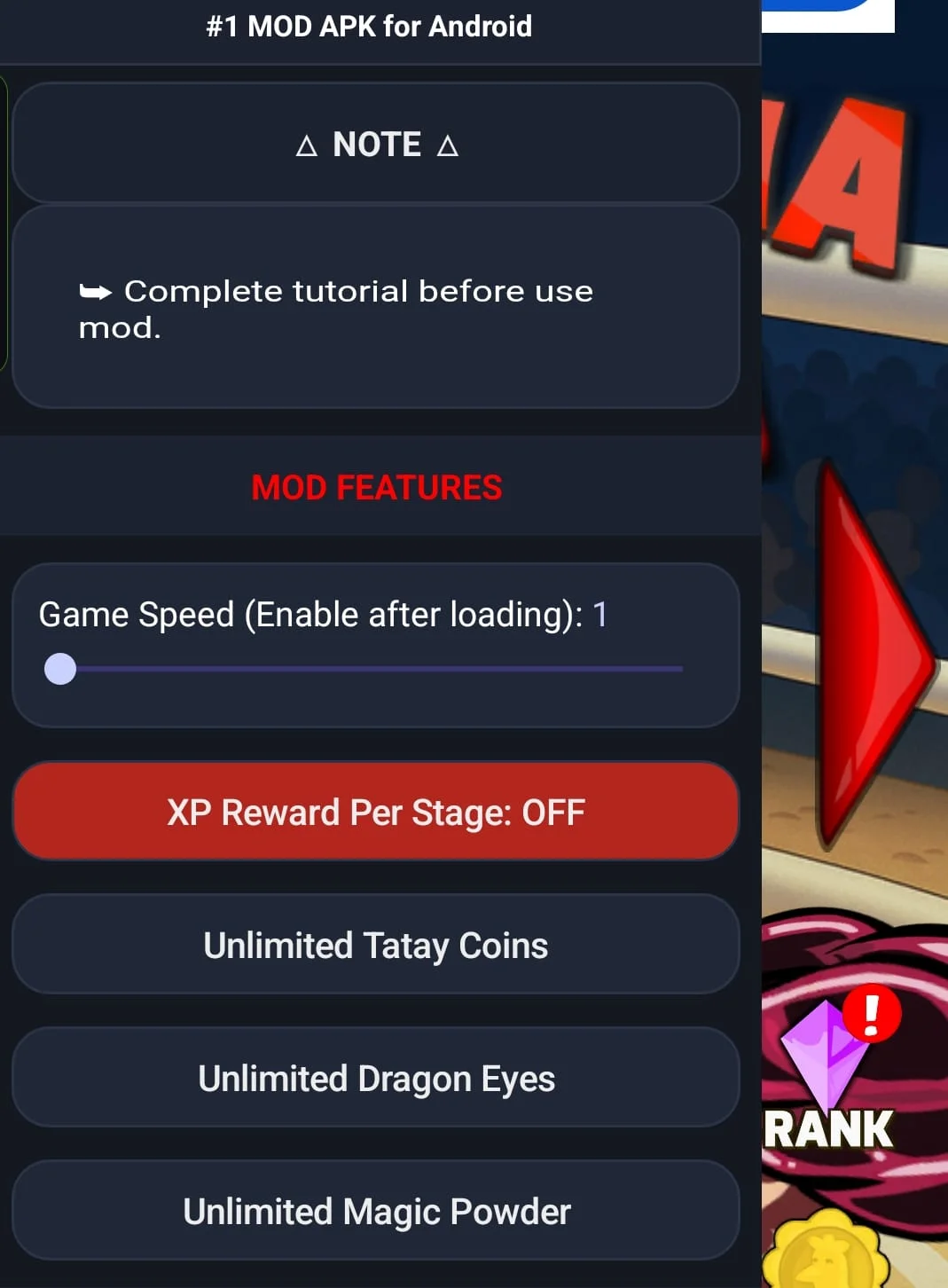
Manok Na Pula Mod APK is a feature-injection mod with an optional mod-menu toggle panel for its cheat-type features (unlimited currencies, max level, one-hit kill) — not a “crack” in the strict sense, because the base game is free with no purchase gate or license check to remove in the first place. That distinction matters for the legality question below: cracking a paid product’s DRM and describing a free game’s feature-modification carry meaningfully different exposure.
Is It Legal? Nominative Fair Use and Personal Use
Running a modified build of a free game for personal use, and a site describing and linking to that build, sit in a real, well-established legal category — nominative fair use — rather than in a legal vacuum every competitor’s one-line hedge implies.
Nominative fair use lets a party reference another party’s trademark to describe or discuss that party’s actual product, under a three-part test: the referenced product genuinely can’t be identified without using its name; only as much of the mark is used as necessary to identify it; and nothing about the reference implies TATAY Games’ sponsorship or endorsement of the mod. Content that describes the game, names its features accurately, and never claims official status or affiliation sits inside that test.
The realistic exposure isn’t primarily a lawsuit — it’s platform-level enforcement. Google Search and Google Play both maintain misrepresentation and impersonation policies that weigh the overall impression a page creates, and Google Play’s policy specifically applies “even if the app says it’s unofficial.” That’s a genuine reason a site in this space keeps a real, separate disclaimer page and never claims to be TATAY Games or an authorized distributor.
Separately, redistributing someone else’s modified binary at scale is a different legal posture than personal use or commentary about one — what follows describes and links to a build, it does not claim ownership of the underlying game, and the disclaimer/terms page carries the formal non-affiliation language in full.
What the App Actually Does With Your Data
A legitimate feature-injection mod like this one needs almost nothing beyond what the base game already requires — and checking that against what the app actually requests is the real version of the “don’t link your accounts” advice every competitor repeats without explaining.
The base game, and by extension a client-side-only modification of it, functionally needs storage access (to write and read the save file, covered in the install guide) and nothing else beyond standard Android app-runtime permissions. A modification that only changes currency counts, level values, and unlock flags has no functional reason to request SMS access, contact-list access, call-log access, accessibility-service permissions, or microphone/camera access. If an installed build’s permission prompt asks for any of those, that’s worth treating seriously regardless of what the download page claims.
The generic advice to avoid linking a real Facebook, Gmail, or payment account to a modded install is sound, but the actual reason is narrower than “just in case”: since the mod runs outside Google Play’s own account-security review, there’s no equivalent app-review process checking what a modded build’s network calls actually do — using a secondary account limits what’s exposed if a specific build behaves differently than its permission list suggests.
Account-Ban Risk: Why Tournament Mode Is Different
Account-ban risk splits sharply by game mode because the game’s servers only see what a given mode actually validates server-side.
Offline and non-Tournament online modes largely trust the client’s own reported state, which is why stat changes there go unnoticed by the server in practice. Tournament is the exception specifically because it validates match state and stat consistency server-side — the server checks what the client reports against what it independently expects, and a mismatch that passes silently in another mode gets flagged there. That’s a structural difference in what each mode checks, not a difference in how “risky” the mod itself is.
LOW Offline / Campaign / Single-Player PvE — Negligible risk
The server never sees your session; the mod’s stat changes are invisible to TATAY.
MODERATE Online Multiplayer (non-Tournament) — Moderate risk
The server logs match outcomes and flags statistically unusual results — a chicken winning every match with maxed stats on a new account triggers pattern detection. Non-Tournament multiplayer does not validate per-frame stats aggressively, so bans in this mode are inconsistent.
HIGH Tournament — Highest risk
Tournament is the new server-validated arena. Match state and stat consistency are checked server-side; mod use in Tournament produces account suspensions and permanent bans. Playing Tournament on a modded build is the one place where “use a secondary account” is the honest answer rather than a hedge.
Frequently Asked Questions
Verified safe. Ready to download?
The current build — unlimited money, all 49 chickens, max level 1000, and ad-free play — is on the Manok Na Pula Mod APK page.